Cute Pig: A Cheerful, Practical Farm Animal Embroidery Design
First Impressions: Bright, Friendly, and Surprisingly Versatile
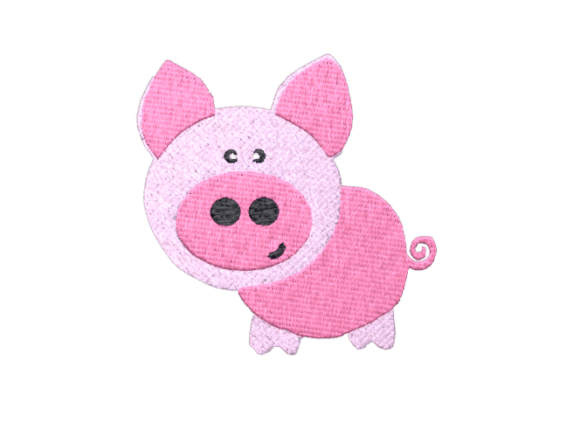
When I opened Cute Pig for the first time, what struck me wasn’t just its charm—it was how immediately *usable* it felt. This isn’t a fussy, overly detailed machine embroidery design that demands perfect lighting and a magnifying glass to appreciate. It’s rounded, expressive, and balanced—soft curves on the snout, a gentle curve in the ear, a compact body that fits comfortably within standard hoop sizes. The visual personality leans warm and approachable, not cartoonish or cutesy to the point of distraction. That matters—especially when you’re stitching for real customers who want handmade sincerity, not novelty overload.
A Real Project Test: Custom Baby Towels for a Local Boutique
Last week, I used Cute Pig on a set of organic cotton kitchen towels destined for a boutique’s baby gift line. Why towels? Because they’re low-risk, high-impact test grounds: flat surface, stable fabric, visible stitching area—and if the design doesn’t hold up, you’ll see it fast. I paired Cute Pig with soft pastel thread colors (mint, buttercream, blush) and a light tear-away stabilizer. The result? Clean satin stitch outlines, even fill stitch coverage, and zero puckering—even at the curved edges of the pig’s belly and ears. Customers responded instantly: “So sweet!” “My niece will love this!” “Looks handmade, not mass-produced.” That’s the quiet power of Cute Pig: it elevates a simple towel into a personalized gift without shouting for attention.
Where It Shines (and Where to Pause)
Cute Pig works beautifully across a range of common embroidery projects—but not all equally. Here’s where it delivers strongest:
- Custom apparel: Looks especially warm on crewneck sweatshirts and relaxed-fit tees—its scale and shape avoid overwhelming the garment.
- Tote bag design: Stitches cleanly on medium-weight canvas; the pig’s friendly face reads well from a distance.
- Baby embroidery: Its gentle proportions and lack of fine detail make it ideal for onesies, burp cloths, and crib blankets—no snag hazards, no tiny parts that vanish after washing.
- Embroidered patch: Holds crisp shape when stitched on twill and fused to denim or corduroy—great for craft fair merchandise or Etsy seller bundles.
- Holiday embroidery: Paired with red-and-green thread or stitched onto gingham fabric, it adds farmhouse charm to stockings, aprons, or pillow covers without leaning too seasonal.
But be thoughtful in these cases:
- Textured fabrics (like terry cloth or heavy linen): Reduce stitch density slightly and use cut-away stabilizer—the pig’s smooth contours can blur on uneven surfaces.
- Stretchy fabric (jersey, rib knit): Always test first. The design’s clean lines rely on stability; without proper backing and hooping, distortion creeps in near the snout and legs.
- Dark fabric: Use bright, contrasting thread—not just for visibility, but for emotional impact. On navy or charcoal, a sunny yellow or coral Cute Pig feels joyful, not washed out.
- Curved surfaces (caps, beanies): Resize down to 3.5” max and confirm hoop compatibility. The ears and snout are forgiving, but don’t push it beyond 4” on a curved crown.
What It Adds to Your Finished Product—Beyond Cuteness
As a designer who’s shipped hundreds of embroidered items, I notice what makes buyers pause, click “add to cart,” and leave five-star reviews. Cute Pig contributes meaningfully to several key qualities:
- Visual appeal: Its balanced negative space keeps the eye engaged—not too dense, not too sparse. That helps your product stand out in an Etsy listing or Instagram feed.
- Handmade presentation: It avoids over-digitized perfection. Slight variation in stitch flow (especially in the ear curve) reads as intentional, human craftsmanship—not robotic replication.
- Brand consistency: If your shop leans rustic, modern-minimal, or gentle nursery, Cute Pig adapts without needing heavy editing. It’s a flexible design asset, not a one-note gimmick.
- Giftability: People buy farm animal embroidery for warmth and familiarity—not irony. Cute Pig lands that note cleanly, whether it’s for a new parent, a teacher, or a friend who loves animals.
Practical Designer Notes Before You Stitch
Don’t skip these—even if you’ve used dozens of pig designs before:
- Test Cute Pig on scrap fabric matching your final project’s weight and stretch.
- Check thread color contrast in both natural and artificial light—some pastels fade on dark backgrounds.
- Review stitch density: If your machine struggles with dense fills, consider reducing density by 5–10% for lightweight fabrics.
- Confirm hoop size early—don’t assume it fits your standard 4×4 unless verified. Some versions may include larger formats, but always double-check.
- Inspect small details: Are the eyes distinct? Does the snout curve read clearly at 3”? Zoom in on your embroidery software preview.
- Try a black-and-white mockup: It reveals clarity issues hidden by color—especially important for digital embroidery file previews or printable mockups.
- Use appropriate stabilizer: Light tear-away for stable wovens; cut-away for knits or anything that will be washed often.
- Verify licensing: Since Cute Pig is marketed for personal and commercial embroidery, confirm whether resale of finished products or redistribution of the digital embroidery file is permitted under its terms.
Final Thought: A Reliable, Human-Centered Design Asset
Cute Pig won’t replace your entire farm animal collection—but it earns its place as the go-to when you need cheerful, stitchable, customer-approved charm. It’s the kind of embroidery file that supports your craft business quietly: no re-dos, few support questions, and consistent positive feedback. Whether you’re embroidering a single holiday gift or prepping 50 tote bags for a craft fair, Cute Pig shows up ready—not flashy, not fragile, just genuinely useful. And in the world of handmade product and commercial embroidery, that’s the highest compliment of all.