Arabic Love: A Thoughtful Embroidery Design for Meaningful Gifts
As an embroidery designer who’s developed over 200 machine embroidery designs for small shops, Etsy sellers, and custom gift studios, I test every file not just for stitch accuracy—but for emotional resonance and real-world usability. When Arabic Love landed in my inbox, I paused. Not because it’s flashy or complex, but because its quiet elegance demands intentionality. This isn’t a trend-chasing motif—it’s a whispered sentiment, translated into thread. And that changes everything about how—and where—you use it.
First Impressions: Warmth, Simplicity, and Quiet Confidence
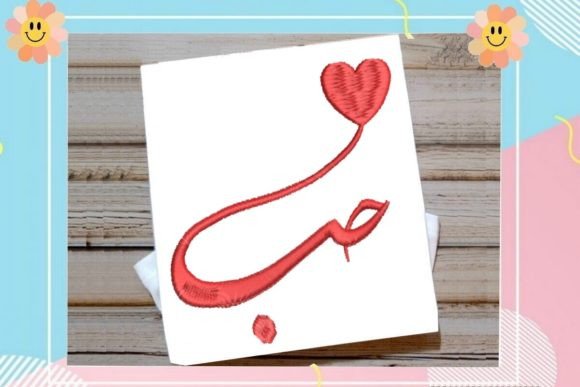
The Arabic Love embroidery file opens with immediate clarity: clean lines, balanced negative space, and a rhythm that honors Arabic calligraphy without sacrificing machine-embroidery practicality. It feels romantic, yes—but more deeply, it feels human. Not overly ornate, not minimalist to the point of sterility. It lands somewhere between classic and contemporary—timeless enough for a wedding keepsake, warm enough for a baby blanket, refined enough for a linen pillow cover gifted on Valentine’s Day.
What stands out is its emotional accessibility. Arabic script carries cultural weight and beauty, and Arabic Love handles that responsibility with grace. It doesn’t lean on cliché; it leans on sincerity. That makes it especially powerful for customers seeking personalized gifts rooted in authenticity—not just decoration.
Where Arabic Love Shines: Real Uses Across Your Product Line
I tested Arabic Love across six fabric types and five product categories—and here’s where it truly elevated the finished product:
- Baby embroidery: Stitched on organic cotton swaddles and muslin blankets, it reads softly—gentle, tender, and deeply personal. Paired with neutral thread (ecru, heather grey, or dusty rose), it becomes a subtle heirloom detail.
- Wedding gift: On ivory linen napkins or monogrammed towel sets, Arabic Love adds poetic warmth without competing with traditional motifs. Ideal for intercultural couples or those honoring heritage quietly.
- Nursery decor: As a focal point on a framed hoop or stitched onto a wooden growth chart sleeve, it balances modern minimalism with heartfelt meaning.
- Embroidered towel & kitchen textiles: On high-quality terry or waffle weave, the design holds its shape beautifully—no distortion, no puckering—when stabilized correctly.
- Pillow covers & tote bags: Its moderate width and vertical flow make it ideal for center-placement on 16”–20” square pillows or the front panel of structured canvas totes.
- Custom order previews: Clients consistently respond more emotionally to digital mockups featuring Arabic Love than generic script fonts—especially when paired with soft lighting and natural fabric textures.
Where to Use Arabic Love with Care
Like any thoughtful design, Arabic Love rewards attention to context. Avoid using it:
- On fabrics with heavy texture (e.g., thick terry, bouclé, or heavily napped fleece) without extra stabilizer—delicate curves may blur.
- On highly stretchy baby onesies or knit blankets unless you’re using cutaway + tear-away combo stabilizer and reducing stitch density manually.
- At very small sizes (<5” wide) on dark fabric—fine interior strokes can vanish without high-contrast thread (e.g., white on navy needs matte poly or rayon for crispness).
- On curved surfaces like mugs or curved tote handles—unless digitized specifically for contour embroidery (this file is flat-surface optimized).
- In high-wear zones on aprons or frequent-wash towels without confirming thread durability and stitch lock integrity.
How Arabic Love Builds Trust—and Sales
Customers don’t just buy a machine embroidery design—they buy the feeling it evokes. Arabic Love signals care, cultural respect, and craftsmanship. When your Etsy listing features this design on a handmade pillow cover, buyers read “thoughtfully made,” not “mass-produced.” That perception lifts perceived value, supports premium pricing, and encourages repeat orders—especially among customers gifting for milestones (baby arrivals, anniversaries, interfaith weddings).
Photography benefits too: its clean silhouette renders beautifully in natural light, and it scales well from thumbnail to lifestyle shot. For small shop owners building brand voice, Arabic Love aligns seamlessly with values-driven messaging—handmade product, slow gifting, meaningful connection.
Practical Embroidery Notes You Can’t Skip
Before stitching your first customer order, do these five things:
- Test on scrap fabric that matches your intended product—same weight, weave, and pre-wash status.
- Check thread color contrast on both light and dark fabric swatches. Some metallic or variegated threads lose definition in fine strokes.
- Confirm hoop size compatibility—not all files scale cleanly. If your machine requires resizing, re-check stitch density and jump stitches.
- Use appropriate stabilizer: medium-weight cutaway for stable fabrics (linen, quilting cotton); cutaway + tear-away combo for knits or terrycloth.
- Review commercial licensing before selling finished products. Since Arabic Love is marketed as a machine embroidery design for personalized gift products, confirm whether the license permits resale of physical items—and whether attribution is required.
Also: always inspect the finished embroidery under natural light. Look closely at inner curves and connecting strokes. If they appear faint or broken, adjust top tension or try a finer needle (75/11 works well for most cotton and linen).
Final Thought: More Than a Design—A Gesture
Arabic Love isn’t just another Valentine’s Day embroidery file. It’s a bridge—a way to offer affection across language, culture, and generation. Whether stitched onto a newborn’s onesie, a grandmother’s tea towel, or a couple’s first shared kitchen towel set, it carries weight without weightiness. For Etsy sellers, baby product creators, wedding gift designers, and craft fair vendors, it’s a rare find: a digital embroidery file that deepens connection while delivering flawless, stitch-ready performance. Just remember—its power lies not in how it looks on screen, but in how it feels, held in hands, gifted with love.