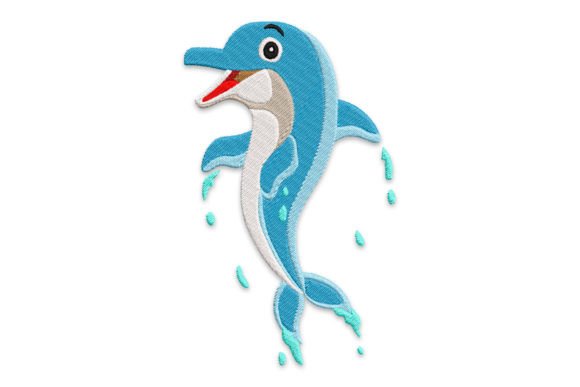
Baby Dolphin Embroidery Design
A Practical Review for Etsy Sellers & Small Craft Businesses
As someone who’s stitched, listed, and shipped hundreds of embroidery-based products on Etsy—and helped other small shop owners do the same—I approach every new Creative Fabrica embroidery design with two questions: Will it translate well across real products? and Will it help my customers imagine taking it home? That’s why I paused when I saw Baby Dolphin. It’s not just another baby animal motif—it’s a mood, a moment, and a merchandising opportunity wrapped in one clean machine embroidery design.
What Kind of Vibe Does Baby Dolphin Carry?
Baby Dolphin reads as playful, summery, and gently whimsical—not overly cutesy or cartoonish. The description hints at motion (“splashing out of the water”), which suggests fluid lines and thoughtful negative space. That’s gold for embroidery: it means the design likely avoids dense fill areas that can overwhelm lightweight fabrics like t-shirts or baby blankets. It feels modern but timeless—equally at home on a minimalist linen pillow cover as it does on a vibrant beach towel. It’s not gender-specific, seasonal only in the softest sense (think spring through early fall), and carries enough charm to appeal across age groups—from newborn gifts to coastal-themed home decor.
Where Does Baby Dolphin Shine Most?
This isn’t a one-size-fits-all design—and that’s a strength. Based on its described versatility, here’s where Baby Dolphin delivers the strongest creative and commercial return:
- Tote bag design: A single centered stitch-out on a natural canvas tote reads effortlessly premium—no extra embellishment needed.
- Sweatshirt embroidery: Especially on heather grey or navy, Baby Dolphin adds quiet personality without competing with the garment’s texture.
- Baby embroidery for onesies, swaddles, or milestone blankets: Its gentle scale and joyful energy align perfectly with gifting expectations for new parents.
- Kitchen towel embroidery or aprons: Paired with simple script (“Saltwater Soul” or “Dolphin Days”), it becomes boutique-worthy kitchen decor.
- Embroidered patch: With clean outlines and moderate detail, Baby Dolphin would press beautifully onto denim jackets or backpacks—ideal for craft fairs or Instagram-driven launches.
How Baby Dolphin Supports Your Product Strategy
For Etsy sellers and handmade product makers, Baby Dolphin is more than a digital embroidery file—it’s a flexible asset. Use it to build cohesive collections: pair it with coordinating seashell or wave motifs (even if sourced separately) for a seaside-themed line. Create printable mockups showing Baby Dolphin on multiple fabric types—this saves time on photoshoots and helps shoppers visualize scale and placement before buying.
It also supports storytelling in your listings. A sweatshirt with Baby Dolphin isn’t just apparel—it’s a memory trigger (“Beach vacations with baby”), a lifestyle signifier (“Coastal calm, even on weekdays”), or a personalized gift anchor (“Add their name below the splash!”). That emotional resonance lifts perceived value and justifies higher price points.
And let’s not overlook photography: because Baby Dolphin implies movement and lightness, it photographs exceptionally well against textured backdrops—sand, linen, weathered wood. That makes social media previews and Etsy banner images feel intentional, not generic.
Buyer-Focused Value You Can’t Overlook
When shoppers scroll Etsy, they’re scanning for three things fast: clarity, charm, and credibility. Baby Dolphin delivers all three. Its subject is instantly legible—even at thumbnail size—so buyers don’t need to click to understand what they’re getting. Its tone feels warm and inviting, making finished products feel more giftable (think baby showers, teacher appreciation, or “just because” coastal-themed presents). And because it’s rooted in nature—not trend-driven graphics—it reads as more professional and memorable than flash-in-the-pan designs.
Practical Seller Notes Before You List
Before adding Baby Dolphin to your next batch of Etsy listings or craft fair inventory, take these steps:
- Test the design first: Stitch it on your most common fabric—cotton jersey for tees, terry cloth for towels, fleece for blankets. Note how it behaves with your preferred stabilizer.
- Create a sample stitch-out and photograph it on real fabric—not just a screen mockup. Lighting and texture change everything.
- Compare thread color options: Try classic navy + white, seafoam + cream, or monochrome greys. See which combo best supports your brand palette.
- Check readability at listing-thumbnail size: Zoom out to 25%—does the dolphin’s shape still read clearly? Is the splash distinct?
- Review stitch density: If you plan to use it on delicate fabrics (like baby muslin), confirm it’s not overly dense—otherwise, it may pucker or stiffen the material.
- Confirm hoop size: Know whether it fits your standard 4x4, 5x7, or larger hoop so you can plan production flow efficiently.
- Verify Creative Fabrica licensing before selling finished goods: Ensure the license permits commercial embroidery and resale of physical products. Terms vary by designer—always double-check on the product page.
Remember: the description says it’s meant for beach towels, blankets, t-shirts, swimsuits, and more—but “more” depends on your process. Don’t assume compatibility. Confirm file formats (PES, DST, JEF, etc.) match your machine. If stitch count, exact dimensions, or recommended thread types aren’t listed, go straight to the Creative Fabrica product page and read the fine print. Clarity now prevents returns, reworks, or licensing concerns later.
Final Thought: A Quietly Strategic Addition
Baby Dolphin won’t dominate your homepage—but it might become your most consistently reordered design. It’s the kind of embroidery file that quietly strengthens your catalog: approachable for beginners, versatile for pros, and emotionally resonant for buyers. For Etsy sellers building long-term craft businesses, that balance is rare. Used intentionally—with real fabric tests, smart color pairing, and thoughtful product framing—it’s not just another baby animal embroidery. It’s a small, splashy step toward more memorable, more marketable, and more meaningful handmade goods.