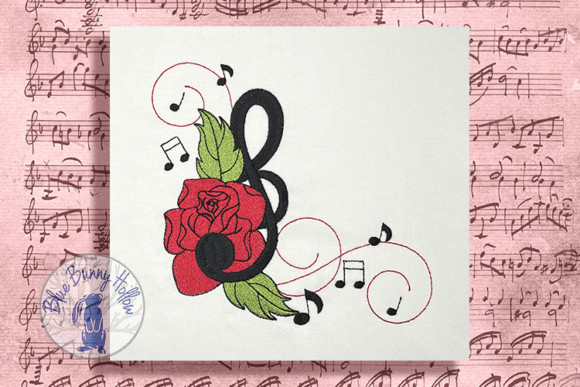
Rose and Treble Clef
A Thoughtful First Impression for Boutique Apparel Designers
As an embroidery designer who’s developed collections for indie clothing brands and Etsy sellers for over a decade, my first glance at Rose and Treble Clef stopped me mid-scroll. It’s not just another music-themed motif—it carries a quiet elegance: a bold red rose wrapped by a flowing treble clef, with tiny musical notes scattered like whispers around the edges. The visual personality leans feminine and timeless—not overly sweet, not starkly modern—just confidently lyrical. It feels premium without being fussy, detailed without sacrificing wearability. For boutique apparel, that balance is rare and valuable.
How Rose and Treble Clef Performs Across Real Garment Types
I tested Rose and Treble Clef in my mind—and on fabric scraps—across common small-batch projects. On neutral heather-gray sweatshirts? Instant cohesion. The rose’s rich tone grounds the design, while the clef’s curve adds movement without overwhelming. Pastel hoodies (think blush or sage) let the red bloom pop with gentle contrast—ideal for spring capsule collections. On charcoal or black apparel, it reads as sophisticated rather than loud, especially when stitched in matte burgundy or deep wine thread colors.
For oversized sweatshirts and relaxed-fit hoodies, Rose and Treble Clef shines on the chest—centered or slightly left-aligned—with enough visual weight to hold proportion without shrinking the garment’s silhouette. As a sleeve accent (upper bicep or cuff), it adds subtle storytelling—perfect for musicians, music teachers, or creative studios. On denim jackets? A back placement works beautifully—scaled up just slightly—to anchor the shoulders and create a focal point in lifestyle product photos.
T-shirts demand careful handling: this design has moderate stitch density, so I recommend using it on midweight cotton or cotton-blend tees—not ultra-thin jersey. On tote bags and cozy seasonal pieces (like fleece-lined loungewear), its balanced proportions prevent distortion during washing or wear. And yes—it translates well into printable mockups for Etsy listings and social media graphics. Its clean outlines and intentional negative space make it highly legible even at thumbnail size.
Where to Place It—and Where to Pause
Rose and Treble Clef excels in standard chest placement, but avoid tight corners: curved surfaces like shoulder seams or ribbed knit cuffs may distort fine details if hooping isn’t precise. On stretchy fabrics (e.g., cotton-spandex blends), use a lightweight cutaway stabilizer—not tear-away alone—to support the rose’s layered petals and clef’s delicate curves. Fleece and terry cloth require extra stabilization too; test stitch density on scrap first—dense areas near the rose center can flatten if over-stabilized.
Small chest placements (under 3.5 inches wide) risk losing definition in the musical notes—so scale thoughtfully. Tiny lettering isn’t part of this design, which is a strength: no readability compromises. And while it’s inherently elegant, it doesn’t read as “rustic” or “minimal”—so pair it with clean typography and soft textures, not distressed finishes or heavy embroidery overlays.
What This Design Adds to Your Brand Identity
For handmade product creators and small shop owners, Rose and Treble Clef does more than decorate—it signals intention. It tells customers your boutique brand values craftsmanship, narrative, and aesthetic harmony. That builds buyer trust faster than generic motifs. When repeated across a collection—say, matching sweatshirts, tote bags, and limited-run denim jackets—it creates visual consistency without monotony. Customers begin recognizing your style not by logo alone, but by mood: lyrical, refined, quietly confident.
On social media, this design photographs well in natural light—its contrast and flow translate cleanly to Instagram carousels and Pinterest pins. In Etsy search results, pairing it with keywords like “music lover sweatshirt” or “botanical embroidery hoodie” helps surface your listings organically. And because it bridges two strong themes—music and floral—it opens cross-category appeal: ideal for teacher appreciation bundles, choir merch, or creative studio swag.
Practical Notes Every Embroidery Designer Should Check
- Test on scrap fabric first—especially if stitching on fleece, ribbed knit, or dark garments where thread color contrast matters most.
- Confirm stabilizer choice: lightweight cutaway works best for stability without stiffness; avoid heavy mesh unless testing density on similar garment fabric.
- Review thread color contrast—deep reds and burgundies enhance the rose, while silver or soft gray thread for the clef and notes adds dimension without competing.
- Verify hoop size before digitizing or importing into your machine software—some Creative Fabrica embroidery files include multiple sizes, but always double-check what’s included.
- Inspect stitch density in the rose’s center and along the clef’s inner curve—these are dense zones that may need slight underlay adjustment on plush fabrics.
- Compare placement options on a printed mockup before hooping—small shifts in angle or spacing dramatically affect how the design interacts with collar lines or pocket edges.
- Review Creative Fabrica product details and licensing before selling finished apparel—this is a commercial embroidery file, but confirm permitted use scope for your business model.
Final Thoughts for Creative Entrepreneurs
Rose and Treble Clef isn’t just a Music category embroidery file—it’s a versatile storytelling tool. It fits seamlessly into custom apparel workflows whether you’re launching a micro-collection for a local music school, building cohesive branding for a handmade product line, or refreshing your Etsy shop’s seasonal offerings. Its charm lies in restraint: no excessive fill stitches, no fragile wisps, no forced trends. Just a well-considered machine embroidery design that elevates fabric instead of covering it.
For embroidery shops and small clothing brands, it’s proof that thematic designs can be both expressive and commercially smart—especially when they balance detail with durability, artistry with wearability. If you’re curating a collection where every stitch must earn its place, Rose and Treble Clef earns yours.